Conduct an Anti-Money Laundering Risk Assessment

Nov
As the global landscape continues to evolve, businesses in the UK find themselves in an increasingly complex regulatory environment. One critical aspect that companies must address is anti-money laundering (AML). The risk of money laundering poses significant threats not just to financial institutions, but to businesses of all sizes across various sectors. Conducting an effective AML risk assessment is essential for ensuring compliance and protecting the integrity of your business.
Understand the AML Risk Assessment
An AML risk assessment is a systematic process that businesses use to identify, evaluate, and mitigate risks associated with money laundering activities. For those with obligations under the Money Laundering Regulations (MLR), conducting a business-wide AML risk assessment is a legal requirement. The primary goal is to protect the organisation from being used as a conduit for illicit financial operations. Falling prey to financial crime can result in severe penalties, reputational damage, and loss of customer trust.
Most businesses have risk management policies and procedures in place for assessing internal and external risk. An AML risk assessment is dedicated to identifying and assessing financial crime and areas of vulnerability. This includes risks associated with terrorist financing, proliferation financing and tax evasion.

AML Risk Assessment Steps
AML policies, controls and procedures should be designed around the results of an anti-money laundering risk assessment. It is therefore important to include adequate and effective steps in the risk assessment process. Adequate resources, funds, and tools must be made available to aid in identifying, assessing, and managing AML risks.
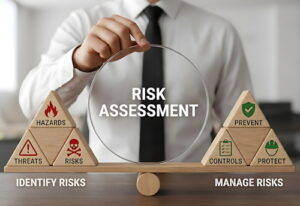
Step 1: Identify Risks – The first step in conducting an effective AML risk assessment involves identifying potential risks specific to your business. Identifying risks includes looking at customer due diligence, products and services, business type and sector, delivery channels, geographic location and transactions.
Step 2: Evaluate Risks – Once you have identified potential risks, the next step is to evaluate their impact and likelihood. You can use a risk matrix to score or rate each risk and determine its severity and probability of occurrence. Rating each risk helps you prioritise implementing measures and manage them effectively.
Step 3: Implement Measures and Controls – After evaluating and rating risks, you can develop and implement appropriate controls to mitigate them. This can include enhanced due diligence, monitoring high-risk clients, staff training, transaction monitoring and effective management information and reporting.
 Step 4: Record Keeping – Each risk assessment must be accurately documented with adequate and clear record keeping. You should maintain detailed records of your risk assessment process, findings, action plans, and the measures taken in response. This documentation is crucial for demonstrating compliance and can protect your business in case of an audit.
Step 5: Review and Monitoring – Finally, an effective AML risk assessment is not a one-time task but an ongoing process. Regularly review and update your risk assessment to adapt to changes in your business operations, regulatory requirements, and the evolving risks associated with money laundering. You can use previous assessments to identify patterns and ensure action plans have been completed.
What to Consider
- Who your customers are.
- Who your suppliers are.
- Other business relationships.
- Customer geographical location.
- Your onboarding process.
- Your products and services.
- Marketing & delivery channels.
- Transactions and payment processes.
- High-risk clients.
- Sanctions lists and FATF registers.

Other articles you may like…



Conclusion
Conducting an effective anti-money laundering risk assessment is a vital process for UK businesses aiming to safeguard their operations against financial crime. By following these steps, businesses can strengthen their positions against potential risks and ensure compliance with regulations, all while promoting a culture of integrity and accountability in their operations. Addressing AML concerns head-on will not only protect your business but also contribute to a more secure and transparent financial system.
Ready to Use Templates
At Know Your Compliance Limited, we know that drafting policies and maintaining procedures takes time and resources. With 12,000+ customers and more than 15 years of trading behind us, we are a name you can trust! Our AML Policy Templates and AML Toolkits are market leaders and are used by a wide range of business types and industries. From banks and investment firms, through to estate agents and accountants. Whether you need a mandatory anti-money laundering policy template, a full suite of AML policies and controls or a standard AML risk assessment template, we have you covered.