AML Areas to Assess for Risk
Dec
We recently published an article in our quick guide series on how to do an AML risk assessment. In that article we referred to the business areas, functions and activites that should be considered when identifying AML risks. The areas that anti money laundering and financial crime risk can arise from are numerous. We therefore wanted to write this follow-up article, delving deeper in to the AML areas to assess for risk during a business-wide risk assessment.
Assessing AML risks means looking at all business areas that could make financial crime possible or more likely. Some risks are more prevelant within certain predefined areas, such as when dealing with customers or transactions from countries on the FATF list. This makes financial crime within that area more likely and as such can be identifed as an AML risk.
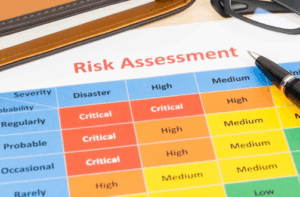 Other risks are identifed and controlled by focusing on anti money laundering measures applied to specific business processes or functions.
For example, ensuring robust, compliant due diligence and customer onboarding controls makes it easier to detect unusual customer behaviour or suspicious sources of funds. Without these measures such activities could go unnoticed, resulting in a high risk of financial crime.
What to Assess for AML Risks
- Types of customers.
- Geographical location of customers or suppliers.
- Transaction types, patterns and volumes.
- Products/services offered.
- Activities undertaken.
- Marketing channels for finding customers.
- Delivery channels for products and services.
- Due diligence processes.
-
 AML Risk Assessment Template
£10.00 (ex vat)
AML Risk Assessment Template
£10.00 (ex vat) -
 Anti Money Laundering Policy Template
£15.00 (ex vat)
Anti Money Laundering Policy Template
£15.00 (ex vat) -
 AML Policy Template & Risk Assessment Pack
£45.00 (ex vat)
AML Policy Template & Risk Assessment Pack
£45.00 (ex vat) -
 Anti-Fraud Policy & Fraud Risk Assessment
£25.00 (ex vat)
Anti-Fraud Policy & Fraud Risk Assessment
£25.00 (ex vat) -
 Due Diligence & Client Risk Assessment Toolkit
£65.00 (ex vat)
Due Diligence & Client Risk Assessment Toolkit
£65.00 (ex vat)
Customers, Relationships and Due Diligence
One of the largest business areas to review when identifying the risks of money laundering and terrorist financing is customers and business relationships. Most of your business functions and processes involve your customers. As such, many AML risk factors originate in this area. When identifying AML risks for your assessment, consider the below questions and criteria.
- Types of customer (i.e. Politically Exposed Persons (PEPs), High-Net-Worth Individuals etc).
- Geographical location of customer (i.e. check the FATF and UK high-risk lists of countries).
- How the customer is introduced to your firm.
- Where customer funds originate (source of funds).
- Customer behaviour (i.e. large cash transactions, one-off transactions; unusual transaction patterns etc.).
- Customers with complicated company ownership structures.
- Customers from high-risk sectors or business types.
- Customers seeking anonymity.
- Remote customers.
- Customers with cash intensive businesses.
- Where the corporate structure of the customer is unusual or excessively complex.

Products and Delivery Channels
Any product or service regulated under the Money Laundering Regulations is at risk from facilitating financial crime. However, some are more at risk or could have a more severe impact than others. The below criteria should be considered when identifying the AML risks associated with your products. For the purposes of this section, ‘products’ has been used to refer to any products, services or activities regulated under the money laundering regulations.
- Products that allow money to be placed in to the business, moved from it or moved through it.
- Products that enable ownership of assets to be disguised.
- Any product that involves private banking.
- A product or transaction which might favour anonymity.
- Products that do not require face-to-face contact and therefore have reduced verification and identification safeguards.
- Where new products or delivery mechanisms are involved.
- Conveyancing and/or property rental.
- Managing trusts or companies.
- Where the service involves the provision of nominee directors, nominee shareholders or shadow directors.
- Where the service involves the formation of companies in a third country.
Transactions and Payment
A large number of anti money laundering and terrorist financing risks are facilitated through business transactions and customer payments. Transaction monitoring is an important AML measure which involves the use of software and systems for added checks. Having processes in place that flag unusual transactions and complex payment structures is both mandatory and essential. When identifying AML risks across your transaction functions, consider the below questions and criteria.
- High value transactions.
- High volumes of transactions.
- One-off transactions.
- Customers accepting high charges and/or penalties without question.
- Customers entering into transactions that do not make commercial sense.
- Cash sales.
- Transactions where source of funds or wealth are hard to identify.
- Unusual source of funds/wealth.
- Payments from/to third parties.
- Unusual or complex transactions.